
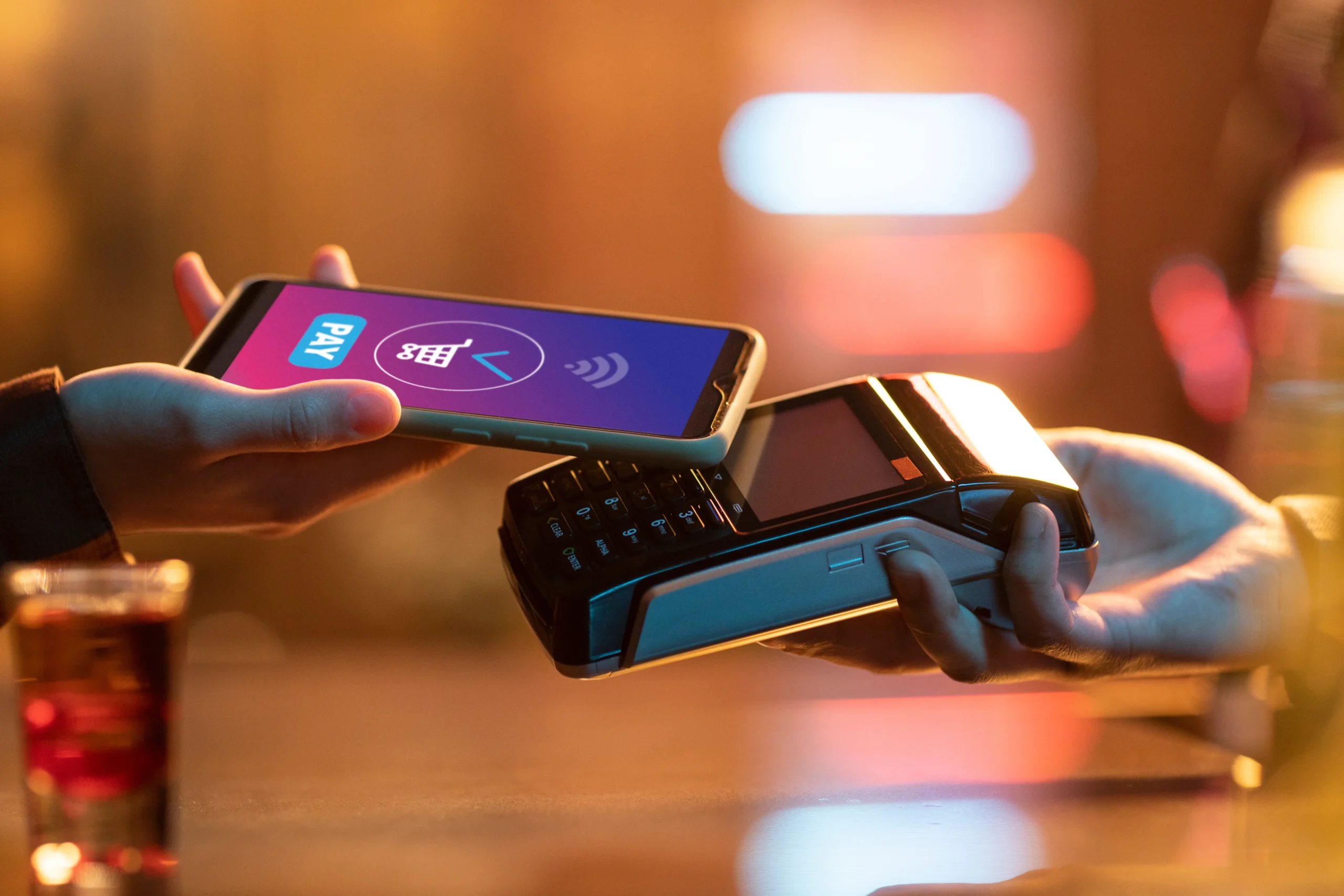
A customer walks up to your counter, orders, and reaches for their phone. Not their wallet. Their phone. They expect to tap, scan, or wave their device and walk away. If your POS system cannot handle that transaction, you have just lost a sale to someone who might not come back.
This is not a prediction about the future. It is what is happening right now across Malaysian retail stores, restaurants, cafes, and supermarkets. A Visa study found that more than two-thirds of Malaysian consumers have attempted to go fully cashless. E-wallet adoption continues to climb. DuitNow QR has become a national payment standard supported across banks and platforms. And younger consumers increasingly treat cash as a backup, not a default.
For business owners, the question is no longer whether to accept cashless payments. It is how to set up your cashless payment POS Malaysia infrastructure correctly so that every payment method your customers prefer is supported, every transaction is recorded accurately, and every ringgit reconciles at the end of the day.
The Cashless Payment Landscape in Malaysia: What Business Owners Need to Understand
Before choosing a POS system or payment terminal, you need to understand the full spectrum of cashless payment methods that Malaysian consumers use. It is wider than most business owners realise.
E-Wallets
E-wallets are mobile applications that store funds digitally. In Malaysia, the most widely used e-wallets include Touch 'n Go eWallet, GrabPay, Boost, ShopeePay, and MAE by Maybank. Customers pay by scanning a QR code or tapping their phone. Each e-wallet has its own merchant onboarding process, fee structure, and settlement timeline. For businesses, the challenge is not just accepting one e-wallet. It is accepting all of them through a single terminal, because your customers do not all use the same app.
DuitNow QR
DuitNow QR is Malaysia's national QR payment standard, developed by Payments Network Malaysia (PayNet). Unlike individual e-wallet QR codes, DuitNow QR is interoperable: customers can scan a single DuitNow QR code and pay using their bank app, e-wallet, or even international wallets linked through cross-border agreements. This reduces the need for multiple QR standees cluttering your counter. A cashless payment POS Malaysia setup that supports DuitNow QR gives you the broadest payment coverage through a single code.
Credit and Debit Cards
Visa, Mastercard, and MyDebit remain staples for cashless transactions, particularly for higher-value purchases. Chip-and-PIN and contactless (tap-to-pay) are both standard. MyDebit, the national debit scheme, typically carries lower merchant discount rates (MDRs) than international card networks, making it a cost-effective option for businesses to encourage.
Contactless Payments (NFC)
Apple Pay, Google Pay, Samsung Pay, and contactless card taps use near-field communication (NFC) technology. The customer holds their phone or card near the terminal, and the payment processes in under two seconds. For quick-service environments where speed matters, contactless is the fastest checkout method available.
Online Bank Transfers (FPX)
FPX (Financial Process Exchange) is primarily used for online transactions, but some POS systems now support it for in-store payments through integrated payment gateways. This is more common in service businesses and higher-value retail where customers prefer direct bank transfers.
What Your POS System Must Do to Handle Cashless Payments Properly
Accepting cashless payments is not just about plugging in a card reader. Your POS system needs to handle the full payment workflow: from accepting the payment to recording the transaction, reconciling the settlement, and generating compliant documentation. Here are the non-negotiable capabilities:
1. Unified Multi-Payment Acceptance
Your POS should accept all major cashless methods, cards, e-wallets, QR codes, and contactless, through a single integrated terminal or workflow. If your staff need to switch between three different devices or apps to process different payment types, you are adding friction, slowing down checkout, and increasing the chance of errors. The best cashless payment POS Malaysia setups consolidate everything into one transaction flow.
2. Automatic Transaction Recording
Every cashless payment must be recorded in the POS system automatically. The payment method, amount, timestamp, and transaction reference should all be captured without manual entry. This is critical for reconciliation: at the end of the day, your POS report should show exactly how much was received through each payment channel, broken down by cards, e-wallets, QR, and cash separately.
3. Multi-Tender and Split Payment Support
Customers often want to pay using a combination of methods: half on e-wallet, half on card. Or split a restaurant bill between three people using three different payment apps. Your POS needs to handle multi-tender transactions natively. If it cannot, your staff will need to process multiple separate transactions and manually reconcile them, which is both slow and error-prone.
4. Real-Time Settlement Tracking
Different payment providers settle at different speeds. Card payments might take one to two business days. Some e-wallets settle daily, others weekly. Your POS should track pending settlements alongside completed ones, so you always know how much cash is actually available versus how much is still in transit. Without this, your cash flow picture is incomplete.
5. E-Invoicing Compatibility
LHDN's e-invoicing mandate requires that every sales transaction generates a compliant e-invoice. This applies regardless of whether the customer pays by cash, card, or e-wallet. Your POS must generate the e-invoice at the point of transaction with the correct payment method recorded. A system that records all cashless payments but cannot generate compliant e-invoices forces you to maintain a separate compliance tool, doubling your administrative workload.
6. Refund Processing Across Payment Types
Refunds on cashless transactions are more complex than cash refunds. If a customer paid by GrabPay, the refund needs to go back to GrabPay, not to their bank account or a different e-wallet. Your POS should track the original payment method and route the refund correctly. Systems that cannot do this force staff to process refunds manually outside the POS, which breaks your transaction audit trail.
5 Mistakes Malaysian Businesses Make With Cashless Payment Setup
1. Using Standalone QR Standees Instead of POS-Integrated Payments
Many small businesses accept e-wallet payments through standalone QR standees provided by individual e-wallet companies. The customer scans the QR, pays, and shows the confirmation screen to the cashier. This works, but it has a critical flaw: the payment is not recorded in your POS system. You have to manually reconcile e-wallet payments with your sales data at the end of the day. As transaction volume grows, this becomes a daily reconciliation headache.
2. Accepting Only One or Two Payment Methods
Some businesses accept cards but not e-wallets. Others accept Touch 'n Go but not GrabPay. Every payment method you do not accept is a potential customer who cannot pay you. In Malaysia's fragmented e-wallet market, limiting your acceptance to one or two methods excludes a significant portion of the cashless-paying population. Your POS should cover the full spectrum.
3. Ignoring MDR Costs Until It Is Too Late
Merchant discount rates vary by payment method and provider. Credit cards typically carry higher MDRs than debit cards or DuitNow QR. Some e-wallets charge transaction fees while others offer promotional zero-fee periods that eventually expire. Understanding your MDR structure before committing to a payment setup ensures you are not surprised by fees that erode your margins. Factor MDR into your pricing strategy from day one.
4. No Offline Fallback for Payment Processing
Cashless payments inherently require connectivity. If your internet drops and your POS has no offline mode, you cannot process card or e-wallet payments. You are left accepting cash only, which many cashless-first customers may not carry. A resilient cashless payment POS Malaysia setup should have an offline mode that queues transactions for processing once connectivity is restored, even if cashless-specific transactions require re-authorisation.
5. Not Training Staff on Multi-Payment Workflows
A system that supports six payment methods is only as good as the staff operating it. If your cashier does not know how to process a split payment, handle a contactless tap, or initiate a refund on an e-wallet transaction, the customer experience suffers. Training should cover every payment scenario your business encounters, not just basic card swipes.
Cashless Payment Priorities by Business Type
Retail Stores
Priority: Speed and variety. Retail customers expect to tap and go. Contactless card and NFC phone payments should process in under three seconds. E-wallets and DuitNow QR must be integrated into the POS, not handled through separate standees. For supermarkets and high-volume retail, self-checkout kiosks with built-in cashless payment capability reduce queue times during peak hours.
Restaurants and Cafes
Priority: Bill splitting and multi-tender flexibility. Dining groups want to split the bill, each paying with a different method. QR code ordering systems that accept payment at the table (before or after the meal) reduce counter congestion. For quick-service cafes, self-service kiosks with cashless payment eliminate the counter bottleneck entirely during peak hours.
Cinemas and Entertainment Venues
Priority: High-volume throughput. Before a blockbuster screening, hundreds of customers need to buy tickets and concessions within a narrow time window. Self-service kiosks with integrated cashless payment (cards, e-wallets, QR) process these transactions in parallel, avoiding the single-counter bottleneck. Online pre-payment through web and mobile channels further reduces on-site congestion.
Multi-Outlet Chains
Priority: Centralised payment reporting. Headquarters needs a consolidated view of cashless payment data across all locations. Which outlets have the highest e-wallet adoption? Which branches process the most contactless transactions? How do MDR costs compare by payment method across the chain? A cashless payment POS Malaysia setup with head office reporting gives chain operators the data they need to optimise payment acceptance across every branch.
Future-Proofing Your Cashless Payment Setup
Malaysia's cashless ecosystem is still evolving. Cross-border QR payment interoperability is expanding, with DuitNow QR already linked to payment networks in Singapore, Thailand, and Indonesia. New payment methods will emerge. Consumer preferences will shift. Your POS system should be able to add new payment methods through software updates rather than hardware replacements. A system that requires a new terminal every time a new e-wallet launches is a system designed to extract recurring hardware costs from you, not to serve your business.
Look for POS providers that offer middleware or payment integration layers that can onboard new payment methods without replacing your existing terminals. This is particularly important as Malaysia's payment landscape continues to diversify.
Where EASI Fits: Cashless Payment Built Into the POS, Not Bolted On
EASI POS was designed for environments where payment diversity is the norm, not the exception. Major cinema chains processing thousands of daily transactions across hundreds of terminals and self-service kiosks, supermarket groups handling peak-hour traffic, restaurant chains managing bill splits across multiple payment methods. These are the environments where EASI's cashless payment integration has been tested and proven.
EASI POS supports the full spectrum of cashless payment methods used in Malaysia: credit and debit cards (Visa, Mastercard, MyDebit), e-wallets (Touch 'n Go, GrabPay, Boost, ShopeePay), DuitNow QR, and contactless NFC payments including Apple Pay. All payment methods are processed through a unified workflow at the POS terminal. No separate standees. No manual reconciliation.
Multi-tender transactions, split payments, and refund routing back to the original payment method are handled natively. Every transaction records the payment type, amount, and reference automatically, feeding into end-of-day reconciliation reports that break down revenue by channel.
For self-service deployments, EASI's kiosk hardware accepts both cash (with note acceptance and change dispensing) and the full range of cashless methods. This dual cash-and-cashless capability is a critical differentiator in Malaysia, where a significant portion of the population still prefers cash.
EASI's OmniLink MS middleware connects the POS system with third-party payment processors, accounting platforms, and enterprise backends. When new payment methods launch in Malaysia, OmniLink enables integration through software updates rather than terminal replacements.
E-invoicing compliance is built into the POS, generating LHDN-compliant invoices for every transaction regardless of payment method. Offline functionality ensures transactions continue during internet outages, with automatic sync when connectivity returns.
With ISO/IEC 27001 and SOC 2 Type 2 certifications, EASI handles payment data under internationally audited security standards. Local support teams in Petaling Jaya and Singapore provide on-site assistance when needed.
Frequently Asked Questions
What cashless payment methods should a POS system in Malaysia support?
At minimum, your cashless payment POS Malaysia setup should support credit and debit cards (Visa, Mastercard, MyDebit), major e-wallets (Touch 'n Go, GrabPay, Boost, ShopeePay), DuitNow QR, and contactless NFC payments (Apple Pay, Google Pay). Supporting all of these ensures you do not lose sales to customers whose preferred payment method is unavailable.
Is it better to use standalone QR standees or POS-integrated cashless payments?
POS-integrated is strongly recommended. Standalone QR standees require manual reconciliation because the payment is not linked to your sales data. POS-integrated cashless payments record the transaction automatically, match it to the sale, and include it in your end-of-day reports. This saves time, reduces errors, and gives you accurate financial data.
What are merchant discount rates (MDR) and how do they affect my business?
MDR is the fee your payment provider charges for processing each cashless transaction, expressed as a percentage of the transaction amount. Rates vary: credit cards typically carry 1.5% to 2.5%, debit cards 0.5% to 1%, and DuitNow QR is often lower or zero during promotional periods. These fees reduce your net revenue, so understanding your MDR structure across all payment types is essential for pricing and margin planning.
Can my POS system still work if the internet goes down?
Cash transactions can continue offline on most POS systems. Cashless transactions typically require connectivity for authorisation. However, some POS systems offer offline queuing, where the transaction is recorded locally and processed once the internet is restored. The key is choosing a system that does not completely shut down during an outage, so your operation can continue accepting at least cash and potentially queue pending cashless transactions.
Do I need e-invoicing for cashless transactions?
Yes. LHDN's e-invoicing mandate applies to all sales transactions regardless of payment method. Whether your customer pays by cash, card, or e-wallet, a compliant e-invoice must be generated. Choosing a POS system that generates e-invoices automatically at the point of transaction ensures compliance without additional manual steps.